Frequently Asked Questions About Demolition Services in New Jersey
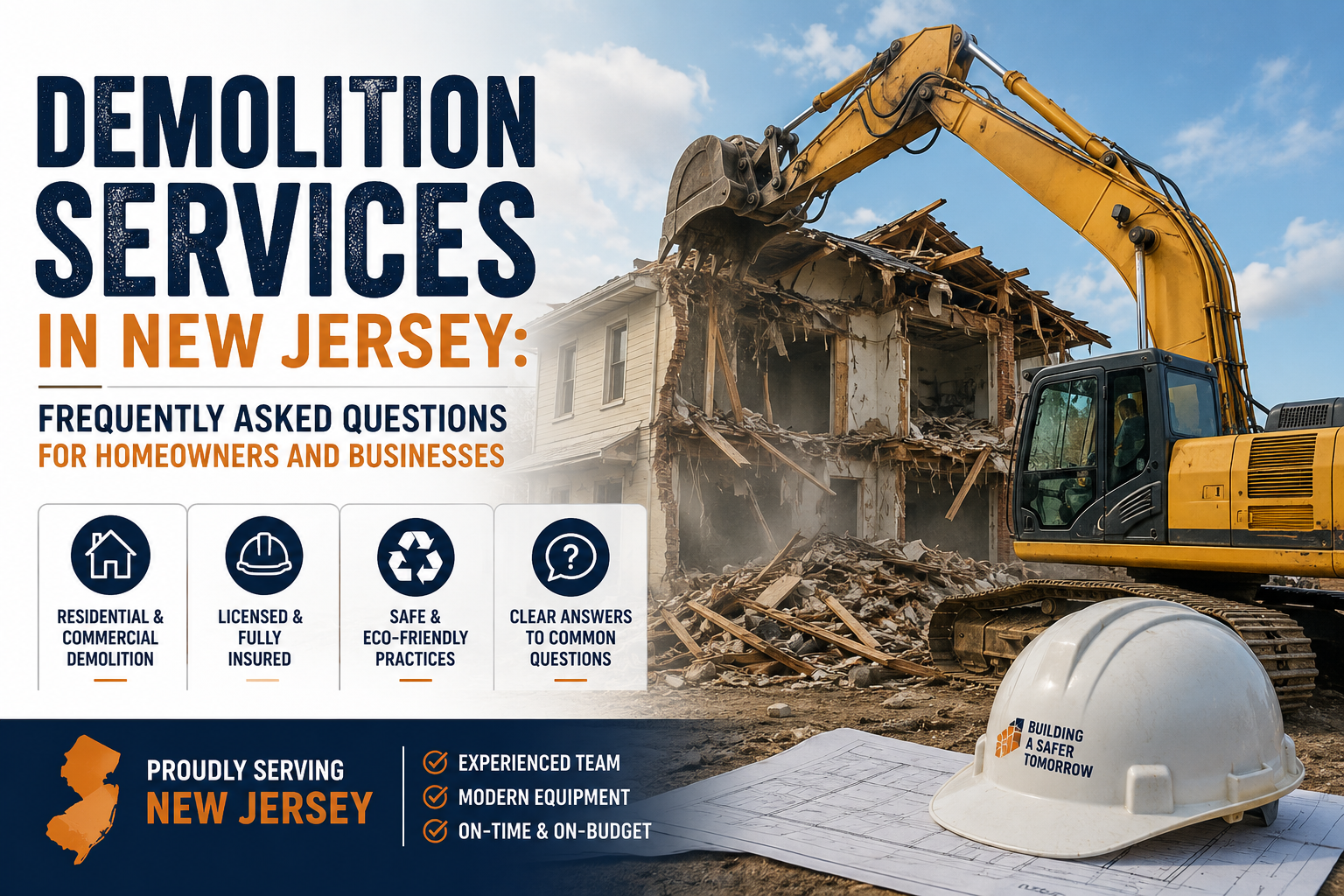
Frequently Asked Questions About Demolition Services in New Jersey
If you're searching for a demolition company near you, choosing the right contractor can make a major difference in safety, efficiency, and overall project success. Whether you need interior gutting, debris hauling, selective demolition, asbestos removal, or a full residential teardown, working with an experienced local team helps ensure the job gets done properly, on time, and in compliance with local regulations.
This guide is for homeowners, property managers, developers, and business owners who need reliable information about demolition in New Jersey. Below you'll find clear answers about permits, pricing, eco-friendly options, and what to look for when hiring a qualified contractor.
What are the best demolition services available in New Jersey?
The best demolition services combine safety, precision, and full project support from start to finish. A dependable contractor should handle interior gutting, selective demolition, debris hauling, asbestos removal, and full structural demolition when needed. Top companies also understand local codes, permit requirements, and disposal regulations — important for both residential and commercial jobs.
When comparing local providers, look for a team that manages the full scope of work instead of forcing you to coordinate several vendors. A well-rounded contractor saves time, reduces risk, and keeps your project on budget. EMP Contracting offers demolition services tailored to homeowners and businesses that need professional results and dependable scheduling.
Where can I hire a reliable demolition company in NJ?
Look for a licensed, insured, and experienced contractor with a strong reputation in the local market. Start by reviewing company websites, service descriptions, testimonials, and project photos to see whether they handle the type of work you need.
A dependable contractor communicates clearly, provides a detailed estimate, and explains the process before work begins. They should also understand local permitting, safety rules, and debris disposal requirements. EMP Contracting is a trusted choice for clients who want a responsive, professional team equipped for both small and complex projects.
How much does residential demolition typically cost in New Jersey?
Cost depends on the size of the structure, the materials involved, the amount of debris, and whether special services like asbestos removal are required. A small interior job may cost far less than a full house teardown, while larger or more complex projects increase in price due to labor, equipment, hauling, and permitting. Site access, utility disconnects, and disposal fees also affect the final number.
The best way to get an accurate price is to request a site-specific estimate. A professional quote should clearly explain what's included so there are no surprises later. Don't choose based on the lowest price alone — a quality contractor balances affordability with safety, legal compliance, and thorough cleanup.
What permits are required for demolition projects in New Jersey?
Most demolition projects require permits issued by the local municipality or building department. Requirements vary depending on whether the project involves interior gutting, selective demolition, full structural demolition, or utility disconnection. Additional approvals may be needed for asbestos removal, waste disposal, or environmental compliance — which is why experienced contractors often help manage the permitting process for their clients.
This is especially important for jobs where inspections and documentation are part of the process. Skipping the proper permits can lead to delays, fines, or work stoppages. Choose a contractor who's familiar with New Jersey regulations and can guide you through every step before demolition begins.
Are there eco-friendly or sustainable demolition options in NJ?
Yes, and they're becoming increasingly popular among homeowners and businesses. Sustainable demolition focuses on reducing waste, salvaging reusable materials, and recycling debris instead of sending everything to a landfill. Selective demolition is one of the most effective approaches, since it removes only the parts of a building that need to come out while preserving what can be reused.
Many contractors now build recycling and material recovery into their process, especially for wood, metal, concrete, and fixtures. If sustainability matters to your project, ask whether the company offers green demolition practices, recycling plans, and responsible disposal.
What is interior gutting and when is it needed?
Interior gutting removes the non-structural elements inside a building while leaving the main frame intact — drywall, flooring, ceilings, cabinetry, insulation, fixtures, and outdated systems. It's commonly used before remodeling, renovation, or a full redesign, and it's often the first step in preparing a property for modern upgrades.
This service matters most for homeowners who want to transform an older layout without tearing down the entire structure, and for businesses — offices, retail spaces, restaurants — that need a clean slate for new construction. A skilled team can complete interior gutting carefully and efficiently, helping you move forward with your renovation plan.
What does debris hauling and removal involve?
Debris hauling involves collecting, loading, transporting, and disposing of demolition waste after a project wraps up — drywall, wood, metal, concrete, flooring, roofing, fixtures, and other construction debris. Proper debris management matters because a site can quickly become unsafe or disorganized if materials aren't removed in a timely way.
For both residential and commercial jobs, hauling is more than cleanup — it's part of the overall demolition process, and it should be handled by a team that understands disposal regulations and recycling requirements. Ask upfront whether hauling is included and whether materials are sorted for reuse or recycling.
What is asbestos removal and why is it important before demolition?
Asbestos removal is the safe identification, containment, and disposal of materials that contain asbestos before demolition begins. Asbestos was commonly used in older buildings — in insulation, floor tiles, pipe wrapping, ceiling materials, and siding. When disturbed, its fibers can become airborne and pose serious health risks, so it must be handled by qualified professionals using proper safety procedures and legal disposal methods.
Before any demolition project involving an older structure, asbestos inspection and removal may be required by law — this protects workers, future occupants, and the surrounding environment. Always confirm your contractor can coordinate or perform asbestos removal as part of the plan.
Can I get an online quote for demolition services in New Jersey?
Yes — most contractors now offer online quote requests to speed up the process. A good quote form usually asks for the property address, the type of structure, the size of the job, and which services you need. This helps the contractor provide an initial estimate and decide whether a site visit is needed.
An online quote is a helpful starting point, but it's usually not the final price — a site inspection may be necessary to assess access, materials, utilities, and permits. Look for a contractor who offers fast communication, clear estimates, and a straightforward path to booking a consultation.
What should I look for in a specialized residential demolition contractor in NJ?
Look for experience, licensing, insurance, and a proven record of safe, high-quality work. The contractor should understand the unique challenges of residential projects — tight property access, neighborhood safety, permit requirements, and careful debris removal — and be able to explain the timeline and provide a detailed written estimate.
It also helps to choose a team that handles related services like interior gutting, asbestos removal, and hauling under one roof, which prevents delays from juggling multiple vendors. Read reviews, check references, and ask about past projects similar to yours.
What commercial demolition services are available in New Jersey?
Commercial demolition covers a wide range of projects for offices, retail stores, warehouses, restaurants, multifamily properties, and other business spaces — interior demolition, selective demolition, tenant improvements, structural demolition, debris hauling, and site prep for redevelopment. Commercial jobs often require more coordination than residential work due to larger footprints, stricter timelines, and greater safety considerations.
A professional contractor helps businesses complete renovations, repurpose buildings, or clear space for new construction while minimizing disruption to surrounding operations. Look for proven commercial experience and strong project management on both small and large-scale jobs.
## What is selective demolition and how does it differ from full demolition?
Selective demolition removes specific parts of a structure while leaving the rest intact — interior walls, ceilings, flooring, fixtures, or targeted sections during a renovation. Full demolition, by contrast, tears down an entire structure. Selective demolition is often used when a building still has useful structural components worth preserving.
It's a waste-conscious option too, since it can reduce debris and allow materials to be reused or recycled. If you're comparing contractors, ask whether they specialize in precise selective work as well as full tear-downs.
EMP Contracting is ready to help with interior gutting, debris hauling, selective demolition, and asbestos removal across New Jersey. Contact us today for a free quote and discover why property owners and businesses trust our team for professional demolition services. You can also reach
EMP Contracting is ready to help with interior gutting, debris hauling, selective demolition, and asbestos removal across New Jersey. Contact us today to get started: Call now, Send WhatsApp, or visit our website.